
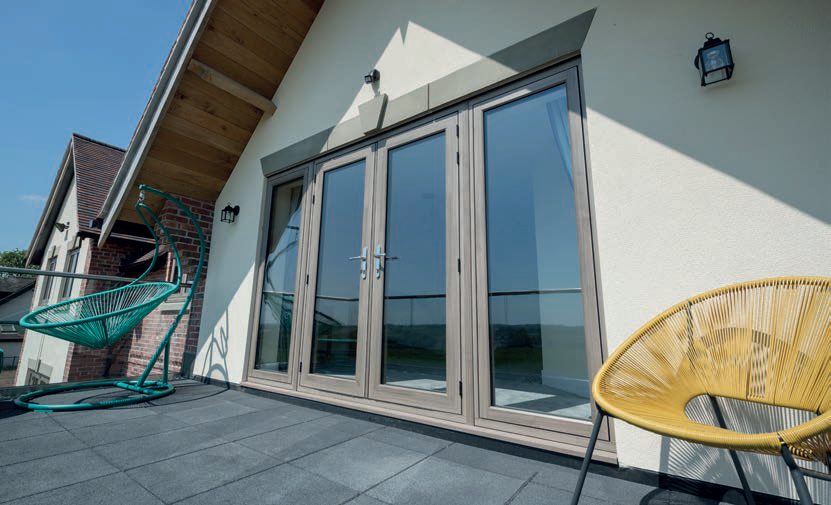
Replacing the windows in your home can improve insulation, security, comfort and appearance. However, before choosing a new style, colour or frame material, it is important to establish whether planning permission or another form of consent may be required.
For many homeowners in Abingdon, replacing existing windows on a like-for-like basis will not require a separate planning application. There are, however, several important exceptions.
Listed buildings, homes in conservation areas, flats, leasehold properties and houses with restricted permitted development rights may all be subject to additional controls. The position can also change if the new windows would look significantly different from those they replace.
This guide explains the main points to consider when planning replacement windows in Abingdon.
Do replacement windows usually need planning permission?
In many ordinary houses, replacement windows can be installed without applying for planning permission, provided that the new windows are similar in appearance to the existing ones.
This is often covered by permitted development rights, which allow certain types of home improvement to take place without a full planning application.
A straightforward replacement is less likely to require planning permission when:
- The property is a house rather than a flat
- The building is not listed
- There are no special planning restrictions
- The new windows are broadly similar in appearance to the existing ones
- The position and size of the window openings are not changing
- The work does not materially alter the external character of the property
Even when planning permission is not required, other rules may still apply. These can include Building Regulations, listed building consent, leasehold conditions and restrictions imposed through previous planning approvals.
Does changing the window style make a difference?
Replacing a window with a similar design is generally more straightforward than making a substantial change to its appearance.
For example, replacing a white casement window with another white casement window of similar proportions is less likely to raise planning concerns than changing it to a dark aluminium frame with a completely different glazing pattern.
Factors that may affect whether consent is needed include:
- Changing the frame material
- Altering the external colour
- Removing traditional glazing bars
- Replacing sliding sash windows with casement windows
- Changing the size or proportions of the panes
- Enlarging or reducing the opening
- Adding a completely new window
- Installing a bay or bow window
- Changing the position of opening sections
The more visible the change is from the street or public areas, the more carefully it may need to be considered.
What if your Abingdon home is listed?
Listed buildings are subject to stricter controls because of their architectural or historic importance.
If your home is listed, you may need listed building consent before replacing or significantly altering its windows. This can apply even when the work would not normally require planning permission.
Windows are often an important part of a listed building’s character. Their frame material, glazing pattern, glass, proportions and opening method may all contribute to its historic significance.
Listed building controls may cover:
- Removing original windows
- Changing timber frames to uPVC or aluminium
- Installing double glazing
- Altering glazing bars
- Changing the type of glass
- Modifying window openings
- Replacing sash windows with another style
- Changing external colours or finishes
Carrying out unauthorised work to a listed building can have serious consequences. It is therefore important to obtain advice before ordering or removing windows.
In some cases, existing windows may need to be repaired rather than replaced. Where replacement is accepted, the new windows may need to closely match the originals in material, detail and appearance.
Do homes in Abingdon conservation areas need planning permission for windows?
Living in a conservation area does not automatically mean that every window replacement requires planning permission. However, extra controls may apply, particularly where the proposed change would affect the appearance or character of the area.
Conservation areas are designated because of their special architectural or historic interest. Abingdon contains many older streets and buildings where traditional details contribute to the overall character of the town.
Planning considerations may include:
- Whether the windows face a road or public space
- Whether the existing windows are original
- The proposed frame material
- The colour and finish
- The arrangement of glazing bars
- The thickness of the frames
- Whether traditional sash windows are being removed
- Whether an Article 4 Direction applies
A sensitive replacement that closely follows the existing design may be more acceptable than one that introduces a noticeably modern style.
What is an Article 4 Direction?
An Article 4 Direction is a planning control that can remove certain permitted development rights from selected properties or areas.
This means work that would normally be allowed without planning permission may require an application.
Article 4 Directions are sometimes used in conservation areas to protect features such as:
- Traditional windows
- Front doors
- Roof materials
- Chimneys
- Boundary walls
- External colours
- Decorative architectural details
A property in a conservation area is not necessarily covered by an Article 4 Direction. Homeowners should check the position for their specific address before making changes.
Where an Article 4 Direction applies, replacing original timber windows with a different style or material may require planning permission, particularly on elevations visible from public areas.
Do flats need planning permission for replacement windows?
Flats do not benefit from the same permitted development rights as ordinary houses.
Replacing windows in a flat may therefore require planning permission, especially if the new windows differ from those already installed.
Even when planning permission is not necessary, the freeholder, landlord or management company may need to approve the work.
Flats are often required to maintain a consistent external appearance. The lease may specify:
- The permitted frame material
- The required colour
- The window style
- The glazing pattern
- The approved installer or supplier
- Responsibility for repairs and replacement
Before ordering new windows for a flat in Abingdon, check the lease and contact the freeholder or managing agent.
What about leasehold houses?
Some houses are leasehold rather than freehold. Even if planning permission is not required, the lease may restrict external alterations.
Permission from the freeholder may be needed before changing the windows, particularly where the new design differs from the original appearance of the development.
This is also relevant to properties managed by housing associations or located on developments with estate-wide design rules.
Can you add a new window without planning permission?
Adding a completely new window can be more complicated than replacing an existing one.
New windows in the side wall of a house may be subject to specific conditions, particularly where they could overlook a neighbouring property.
Depending on the location and design, side-facing windows may need to be:
- Obscure glazed
- Non-opening below a specified height
- Positioned to protect neighbouring privacy
- Designed to comply with planning conditions
New front-facing windows may also attract greater scrutiny because of their effect on the appearance of the building.
Where a new opening is being created, structural and Building Regulations requirements will also need to be considered.
Can you enlarge an existing window opening?
Making an existing window wider, taller or changing its shape is more likely to affect the external appearance of the property.
This may require planning permission depending on the property type, location and scale of the alteration.
Structural work will also be needed, as the wall above the enlarged opening may require a new lintel or another form of support.
A structural assessment may be appropriate before work begins, particularly in older properties or where the opening is being significantly increased.
Do bay windows need planning permission?
Replacing an existing bay window with a similar bay is usually more straightforward than adding a new one.
Creating a new bay window at the front of a property may be treated as an extension because it projects beyond the existing wall. Planning permission may therefore be required.
The exact position will depend on factors including:
- The size of the bay
- Its position on the building
- Whether it faces a road
- The property’s planning history
- Whether permitted development rights apply
- Whether the property is listed or in a conservation area
Bay window replacement also requires careful attention to structural support. In some homes, the window forms part of the support for the structure above.
Can you change window colours without planning permission?
In many ordinary houses, changing the window colour will not require planning permission. However, this should not be assumed in every case.
A substantial colour change may affect the character of:
- A listed building
- A conservation area property
- A flat
- A uniform modern development
- A house subject to planning conditions
- A property covered by an Article 4 Direction
Moving from white frames to dark grey, black or a bright colour can produce a significant visual change. This may be more noticeable on the front elevation or where neighbouring homes all have matching windows.
Homeowners should also consider whether the chosen colour will complement the brickwork, stone, render, roof and front door.
Can timber windows be replaced with uPVC?
In many homes, timber windows can be replaced with uPVC without planning permission. However, this is not always the case.
Restrictions are more likely where:
- The building is listed
- The windows are original
- The property is in a conservation area
- An Article 4 Direction applies
- The home is a flat
- Previous planning conditions specify materials
- The change would substantially alter the building’s appearance
Modern uPVC windows are available in flush casement, sash-style and timber-effect designs. These can provide a more traditional appearance than standard uPVC frames.
However, on historically sensitive buildings, the planning authority may still require timber or a very close match to the original windows.
Is double glazing allowed in listed and period properties?
Double glazing can often be installed in period homes, but listed buildings require particular care.
Standard double-glazed units may be too thick for some traditional frames or may change the appearance of the windows. Slim-profile glazing, secondary glazing or carefully designed replacement units may sometimes be considered.
The appropriate solution will depend on:
- The significance of the existing windows
- Whether they are original
- The condition of the frames
- The appearance of the proposed glazing
- The advice of the conservation officer
- The formal consent requirements
Secondary glazing can sometimes improve warmth and noise reduction while retaining the original external windows. It is not automatically acceptable in every listed building, but it may offer a less visually intrusive option.
Is planning permission the same as Building Regulations approval?
Planning permission and Building Regulations are separate systems.
Planning rules generally consider how development affects the appearance, character, use and surroundings of a property.
Building Regulations focus on matters such as:
- Energy efficiency
- Structural safety
- Ventilation
- Safety glazing
- Means of escape
- Weather resistance
- Access and installation standards
A replacement window project may not need planning permission but may still need to comply with Building Regulations.
Using a FENSA-accredited installer can simplify this process for qualifying replacement window work. The installation can be registered and the homeowner will receive certification for the work.
What are the rules for safety glass?
Safety glazing may be required in locations where ordinary glass could present a greater risk of injury.
This commonly includes glass:
- In or next to doors
- Close to floor level
- In certain low-level windows
- In areas where accidental impact is more likely
The correct glass specification should be identified during the survey and ordering process.
Toughened or laminated safety glass may be used depending on the location and design.
Do bedroom windows need to provide a fire escape?
Some bedroom and other habitable-room windows may need to provide a suitable means of escape.
This can influence the size of the opening, the position of the handle and the way the window operates.
When replacing an existing escape window, the new design should not reduce the available escape opening. A window that looks similar from outside may still operate differently, so this needs to be checked during the survey.
Are trickle vents required in replacement windows?
Current Building Regulations place importance on providing adequate ventilation when windows are replaced.
Trickle vents may be required depending on the existing ventilation arrangements, the type of property and the scope of the work.
Modern windows are generally more airtight than older frames. Although this improves thermal performance and reduces draughts, controlled ventilation is needed to help manage indoor moisture and air quality.
Trickle vents should not simply be omitted for appearance without first confirming the regulatory requirements.
What happens if you replace windows without the necessary permission?
Installing windows without required consent can create difficulties later.
The homeowner may be asked to:
- Submit a retrospective planning application
- Alter the windows
- Replace them with an approved design
- Reinstate original details
- Provide missing certification
- Resolve the issue before selling the property
Unauthorised alterations to listed buildings can be particularly serious.
Planning, listed building and certification issues may also be identified during conveyancing when the property is sold.
Checking the requirements before ordering the windows is normally easier and less costly than trying to correct an unauthorised installation afterwards.
How can you check whether permission is required?
The requirements can vary between properties, even within the same street.
Before ordering replacement windows, it is sensible to check:
- Whether the building is listed
- Whether it lies within a conservation area
- Whether an Article 4 Direction applies
- Whether the property is a house or flat
- Whether permitted development rights have been removed
- Whether previous planning conditions apply
- Whether freeholder or management-company approval is needed
- Whether the proposed design differs from the existing windows
Homeowners can consult the relevant local planning authority and the national Planning Portal for general guidance. For listed or historically sensitive properties, advice from a conservation officer may also be appropriate.
Planning rules and local policies can change, so property-specific confirmation should be obtained before work begins.
Choosing suitable windows for an Abingdon property
Even where planning permission is not required, the new windows should complement the age and appearance of the property.
Traditional Abingdon homes may suit:
- Flush casement windows
- Sliding sash-style windows
- Timber or timber-effect finishes
- Georgian glazing bars
- Heritage colours
- Carefully matched frame proportions
Modern homes may be well suited to:
- Standard uPVC casement windows
- Slim aluminium frames
- Tilt and turn windows
- Larger fixed panes
- Grey or darker contemporary finishes
The aim should be to improve performance without making the windows look disconnected from the rest of the building.
Replacement windows from Isis Windows
Isis Windows has been supplying and installing double-glazed windows and replacement doors in Abingdon and throughout Oxfordshire since 1997.
Our team can help you explore window styles, frame materials, colours and glazing options that suit both your home and your practical requirements.
We provide straightforward advice without pushy sales tactics, and our experienced installers work carefully to minimise disruption in your home.
Isis Windows is FENSA accredited, and our windows and doors are covered by a 10-year guarantee for additional peace of mind.
Where planning permission, listed building consent or another form of approval may be required, homeowners should obtain confirmation from the appropriate authority before placing an order.
Frequently asked questions
Do I need planning permission to replace windows in Abingdon?
In many ordinary houses, planning permission is not required when windows are replaced with a similar design. Different rules can apply to listed buildings, conservation area properties, flats and homes with restricted permitted development rights.
Do I need permission to change from timber to uPVC windows?
Not always. Many homeowners can make this change without planning permission, but consent may be required for listed buildings, some conservation area properties, flats or homes subject to planning restrictions.
Can I install grey windows without planning permission?
A colour change may not require permission on an ordinary house, but dark grey frames can create a noticeable alteration. Check before proceeding if the property is listed, in a conservation area, leasehold or part of a development with consistent external finishes.
Do conservation area properties have to use timber windows?
Not necessarily. Requirements depend on the individual property, its existing windows, local planning policy and whether special controls apply. Some properties may be able to use carefully designed alternatives, while others may be expected to retain or replicate timber windows.
Do I need listed building consent for double glazing?
Possibly. Installing double glazing in a listed building may affect historic fabric or appearance and can require listed building consent. Advice should be obtained before removing or altering existing windows.
Can I replace sash windows with casement windows?
This may be possible on some properties, but it can substantially change the building’s appearance. It is more likely to be restricted on listed buildings, period homes and properties in conservation areas.
Do flats have permitted development rights for windows?
Flats generally do not have the same permitted development rights as houses. Planning permission and freeholder approval may be required.
Can I add a window to the side of my house?
Sometimes, although privacy and overlooking rules may apply. Side-facing windows may need obscure glazing and restrictions on opening. Planning and Building Regulations advice should be obtained before work begins.
Will a FENSA certificate replace planning permission?
No. FENSA certification relates to Building Regulations compliance for qualifying replacement window installations. It does not replace planning permission, listed building consent or freeholder approval.
Who should check whether permission is needed?
The legal responsibility usually rests with the property owner. A window company can provide practical product and installation guidance, but the homeowner should confirm planning, listed building and ownership restrictions with the relevant authority.